The best computer monitor for programmers makes code easier to read, supports efficient multitasking, and stays comfortable through long development sessions. The right choice depends on your preferred screen layout, resolution, connectivity, and budget.
Our 2026 roundup includes compact Full HD displays, spacious ultrawides, sharp 4K panels, and flexible USB-C monitors for home offices, gaming setups, and professional workstations.
Best 10 Computer Monitor for Programmers Picks for 2026
Best Thunderbolt Hub

- QHD IPS display with 120Hz refresh rate
- Built-in KVM for two-computer workflows
- Thunderbolt 4, Ethernet, and six USB ports
Best For: Developers managing multiple computers at one desk
Best 4K Detail

- Sharp 3840 x 2160 UHD resolution
- IPS panel with 178-degree viewing angles
- Flicker Free and Low Blue Light features
Best For: Programmers who prioritize text clarity and pixel density
Best Ultrawide Workspace

- 34-inch 21:9 WQHD workspace
- USB-C with up to 65W power delivery
- 120Hz refresh rate and 3000:1 contrast
Best For: Developers working across several side-by-side windows
Best Large QHD Value
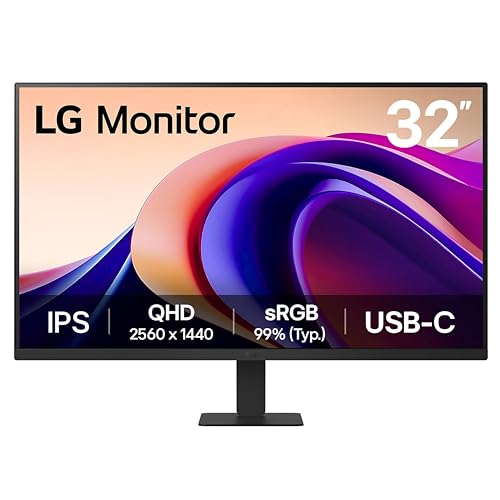
- Large 31.5-inch QHD IPS display
- 100Hz refresh rate for smoother motion
- USB-C with 15W power delivery
Best For: Programmers wanting a spacious, simple QHD workspace
Best Ultrawide Workstation
ViewSonic VG3409C 34-Inch Ultrawide
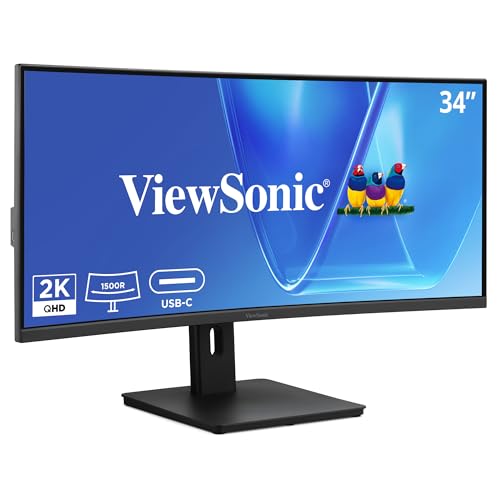
- 34-inch 3440 x 1440 ultrawide workspace
- USB-C with up to 96W power delivery
- Built-in KVM and USB hub
Best For: Multitasking programmers building a flexible workstation
Best Balanced QHD Pick

- Sharp 2560 x 1440 resolution
- Highly adjustable ergonomic stand
- 144Hz refresh with FreeSync
Best For: Everyday coding and productivity in a standard 27-inch format
Best Budget Coding Monitor
Philips 271V8LB 27-Inch Full HD

- Roomy 27-inch Full HD display
- High-contrast VA panel
- EasyRead and eye-care features
Best For: Budget-focused coding and office work
Best for Color-Accurate Coding

- 27-inch QHD IPS panel with 120Hz refresh rate
- 90W USB-C supports one-cable laptop connectivity
- Factory calibrated with 100% sRGB and Pantone Validation
Best For: Programmers who combine coding with design or photo work
Best for 4K Multitasking

- 32-inch 4K QD-OLED panel for sharp, spacious viewing
- 165Hz refresh and 0.03ms response time
- HDMI 2.1 supports 4K at up to 165Hz
Best For: Developers wanting premium visuals for coding and gaming
Best Budget 144Hz Option
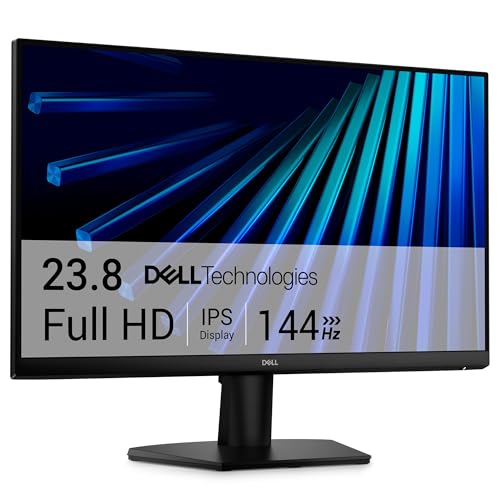
- 27-inch Full HD IPS display with 144Hz refresh rate
- Matte anti-glare screen and TÜV 3-star eye comfort
- Two HDMI ports with AMD FreeSync support
Best For: Affordable coding and everyday desktop work
Best Thunderbolt Hub – Dell UltraSharp 27 QHD
The Dell UltraSharp U2726DER is a strong computer monitor for programmers who want a sharp QHD workspace, modern connectivity, and an organized desk. Its 27-inch IPS display provides room for code, terminals, and browser windows, while the built-in KVM helps switch between two computers with one keyboard and mouse.
Best For: Developers who use multiple computers and want Thunderbolt 4 connectivity, USB expansion, and a color-accurate display.
Pros:
- QHD 2560 x 1440 resolution offers a practical balance of workspace and clarity for coding.
- Built-in KVM supports switching between two machines with one keyboard and mouse.
- Thunderbolt 4, Ethernet, HDMI, DisplayPort, and six USB ports provide flexible connectivity.
- Height, pivot, swivel, and tilt adjustments support a comfortable workstation setup.
Cons:
- The 27-inch screen provides less horizontal space than an ultrawide monitor.
- Its 120Hz refresh rate may be unnecessary if your main focus is static coding work.
Choose this Dell if seamless device switching and one-cable-style desk connectivity matter as much as screen quality. It is especially well suited to developers with both a work computer and a personal laptop.
Best 4K Detail – MSI PRO MP273U 27-inch 4K
The MSI PRO MP273U is a practical computer monitor for programmers who prioritize crisp text and generous desktop detail. Its 27-inch 4K UHD IPS panel can make code, documentation, and side-by-side windows appear sharp, while its wide color coverage also suits design and content work.
Best For: Programmers who want maximum pixel density in a compact 27-inch monitor for coding, multitasking, and professional visual work.
Pros:
- 4K UHD resolution delivers detailed text and workspace clarity.
- IPS technology provides 178-degree viewing angles.
- Adaptive Sync, Flicker Free, and Low Blue Light features support comfortable extended use.
- 95% Adobe RGB, 99% DCI-P3, and Delta E≤2 accuracy support color-sensitive work.
Cons:
- The 60Hz refresh rate is less fluid than the faster displays in this roundup.
- Connectivity is limited to HDMI and DisplayPort.
- At 27 inches, 4K scaling may be preferred for comfortable code readability on some systems.
This MSI is a good fit when sharpness takes priority over refresh rate or docking features. Its 4K panel is particularly appealing for developers who also edit photos, review video, or work with detailed designs.
Best Ultrawide Workspace – Dell 34-inch WQHD Ultrawide
The Dell S3425DW is a wide-format computer monitor for programmers who prefer a broad, uncluttered workspace. Its 34-inch 21:9 display provides substantial horizontal room for code, terminals, and reference material, while USB-C connectivity with up to 65W power delivery can help simplify a laptop-based setup.
Best For: Developers who want an ultrawide screen for side-by-side windows, laptop connectivity, and both work and entertainment.
Pros:
- 34-inch WQHD resolution and a 21:9 aspect ratio provide expansive horizontal workspace.
- USB-C supports up to 65W power delivery for a cleaner laptop setup.
- 120Hz refresh rate with FreeSync Premium enables smooth motion.
- VA panel, 3000:1 contrast, and built-in speakers add versatility.
Cons:
- The 3440 x 1440 resolution is less vertically detailed than a 4K monitor.
- The curved, 34-inch form factor requires more desk space.
- Its one-year warranty is shorter than the three-year warranty listed for some alternatives.
If your programming workflow involves frequent side-by-side windows, this Dell offers more horizontal room than a conventional 16:9 display. USB-C power delivery also makes it a convenient choice for developers who regularly connect a laptop.
Best Large QHD Value – LG 32-inch QHD IPS Monitor
The LG 32U631A-B is a spacious computer monitor for programmers who want a large QHD canvas without moving to an ultrawide layout. Its 31.5-inch IPS display offers wide viewing angles, while the 100Hz refresh rate and Reader Mode make it suitable for long coding and reading sessions.
Best For: Programmers who want a large, straightforward QHD display with USB-C connectivity and comfort-focused viewing features.
Pros:
- 31.5-inch QHD IPS panel provides ample room for code and documentation.
- 100Hz refresh rate offers smoother scrolling and window movement than standard 60Hz screens.
- USB Type-C provides up to 15W power delivery for compatible devices.
- Reader Mode, Flicker Safe, and anti-glare features support extended viewing.
Cons:
- USB-C power delivery is limited to 15W, so it may not replace a laptop charger.
- The monitor has only one HDMI port and one USB port listed.
- Its 250 cd brightness and 1000:1 contrast are more conventional than specialized.
This LG makes sense for programmers who value screen size and simple productivity features over advanced docking. It gives you a roomy QHD workspace, smooth everyday operation, and a useful USB-C connection at a practical scale.
Best Ultrawide Workstation – ViewSonic VG3409C 34-Inch Ultrawide
If you want a computer monitor for programmers that can keep multiple windows visible, the ViewSonic VG3409C offers a spacious 34-inch, 3440 x 1440 ultrawide workspace. Its USB-C connectivity, KVM, and USB hub also make it practical for laptop-based development setups.
Best For: Programmers who prioritize multitasking space and a streamlined workstation.
Pros:
- 34-inch 21:9 UWQHD resolution provides room for code, documentation, and other windows.
- USB-C supports audiovisual signals, data, and up to 96W power delivery.
- Integrated KVM and USB hub help organize peripherals across compatible systems.
- Adjustable stand, matte finish, and 1500R curve support a flexible desktop setup.
Cons:
- Its 34-inch curved design takes more desk space than a standard 27-inch monitor.
- The VA panel and 300-nit brightness may be less suitable for users seeking higher-brightness or IPS-style viewing.
The VG3409C is the most workstation-focused option here, especially for developers who regularly compare code, terminals, browsers, and documentation. Its connectivity features add value when switching between a desktop and compatible laptop.
Best Balanced QHD Pick – Dell S2725DSM 27-Inch QHD
The Dell S2725DSM is a practical computer monitor for programmers who want sharper-than-Full-HD text in a conventional 27-inch format. Its QHD resolution, ergonomic stand, eye-comfort certification, and DisplayPort/HDMI connectivity suit everyday coding and office work.
Best For: Developers who want a balanced QHD monitor for coding, productivity, and occasional gaming.
Pros:
- 2560 x 1440 resolution offers a detailed workspace for code and documentation.
- Height, pivot, swivel, and tilt adjustments support ergonomic positioning.
- 144Hz refresh rate, 1ms MPRT, and AMD FreeSync provide smooth motion.
- Built-in dual 3W speakers and TÜV-certified eye-comfort features add convenience.
Cons:
- At 27 inches, it provides less side-by-side workspace than an ultrawide.
- Connectivity is limited to HDMI and DisplayPort, without USB-C or a built-in USB hub.
This Dell is a strong all-around choice when you want a focused 27-inch coding display without giving up ergonomic adjustment or smooth refresh performance. It is less suited to users who need one-cable laptop charging or extensive peripheral switching.
Best Budget Coding Monitor – Philips 271V8LB 27-Inch Full HD
For shoppers seeking an affordable computer monitor for programmers, the Philips 271V8LB provides a roomy 27-inch screen with Full HD resolution, a VA panel, and eye-care features. Its simple HDMI and VGA connectivity works well for basic desktop coding and office setups.
Best For: Budget-conscious programmers who want a larger screen for everyday coding and documents.
Pros:
- 27-inch display offers more physical screen area than smaller budget monitors.
- VA panel and 3000:1 contrast ratio support deeper blacks and pronounced contrast.
- 100Hz refresh rate, Adaptive-Sync, and 4ms response time provide smooth everyday use.
- EasyRead mode, blue-light filtering, and flicker-free features support reading-heavy work.
Cons:
- 1920 x 1080 resolution provides less workspace and text detail than QHD alternatives.
- Connectivity is basic, with one HDMI port and VGA rather than USB-C or DisplayPort.
- The glossy screen finish may reflect more ambient light than a matte display.
The Philips 271V8LB makes sense for straightforward coding, browsing, and document work when price and screen size matter more than high resolution or advanced connectivity. It can also serve as a practical secondary monitor in a multi-display setup.
Best for Color-Accurate Coding – ViewSonic VP2766-2K
The ViewSonic VP2766-2K is a strong computer monitor for programmers who want sharp QHD text, generous laptop connectivity, and a display that also suits design or photo work. Its 27-inch IPS panel combines 2560 x 1440 resolution with a 120Hz refresh rate, while USB-C can deliver up to 90W to a compatible laptop.
Best For: Programmers who want a color-accurate, ergonomic monitor for coding, creative work, and USB-C laptop setups.
Pros:
- QHD resolution provides more workspace and detail than Full HD.
- Factory calibration, 100% sRGB coverage, and Pantone Validation support accurate color.
- 90W USB-C, USB ports, HDMI 2.1, and included cables simplify connectivity.
- Height, tilt, swivel, and portrait-pivot adjustments support comfortable coding.
Cons:
- It has a single 27-inch display rather than an ultrawide workspace.
- The 5ms response time is less gaming-focused than much faster OLED alternatives.
For most desk-based programming, the combination of QHD clarity, portrait rotation, eye-comfort features, and one-cable USB-C connectivity makes this a particularly versatile choice.
Best for 4K Multitasking – MSI MAG 321UP QD-OLED
The MSI MAG 321UP QD-OLED is a computer monitor for programmers who want a large, highly detailed workspace and exceptionally fast performance. Its 32-inch 4K QD-OLED panel offers 3840 x 2160 resolution, a 165Hz refresh rate, and a 0.03ms response time, making it well suited to coding alongside gaming or media use.
Best For: Developers who prioritize a large 4K canvas, OLED contrast, fast motion, and premium visual quality.
Pros:
- 4K resolution on a 32-inch screen provides sharp text and substantial workspace.
- QD-OLED technology, Quantum Dot color, and DisplayHDR True Black 400 deliver vivid visuals.
- 165Hz refresh rate and 0.03ms response time provide highly responsive performance.
- HDMI 2.1 supports 4K at up to 165Hz, and the stand offers tilt and height adjustment.
Cons:
- The glossy finish may reflect surrounding light more than a matte screen.
- OLED burn-in risk is managed by MSI OLED Care 2.0 rather than eliminated.
- Its gaming-oriented features may be more than a basic coding setup requires.
This is an excellent premium option when programming is only part of the job and you also want a large, immersive display for gaming, video, or other high-detail work.
Best Budget 144Hz Option – Dell SE2726H
The Dell SE2726H is a straightforward computer monitor for programmers who need a roomy 27-inch screen and smooth everyday performance without moving to a higher-resolution panel. Its IPS display uses Full HD resolution, a 144Hz refresh rate, and AMD FreeSync, with a matte anti-glare finish for typical desktop use.
Best For: Budget-conscious programmers who want a large IPS screen for coding, business work, streaming, and occasional gaming.
Pros:
- 27-inch IPS panel provides wide 178-degree viewing angles and consistent color.
- 144Hz refresh rate and 1ms MPRT support smooth motion.
- TÜV Rheinland 3-star eye-comfort certification addresses blue-light comfort.
- Two HDMI ports and thin bezels keep the setup simple and flexible.
Cons:
- Full HD resolution offers less workspace and text detail than QHD or 4K models.
- The stand only provides tilt adjustment, without height or portrait positioning.
- Its listed 8ms response time is less responsive than the fastest gaming displays.
The Dell is a sensible entry-level choice for coding and general productivity, especially if screen size and refresh rate matter more than high-resolution workspace or advanced ergonomics.
How We Picked the Best Computer Monitor for Programmers
We focused on features that have a direct impact on software development: text clarity, usable screen space, ergonomic comfort, connectivity, and long-term versatility. The selection covers several panel types, sizes, aspect ratios, resolutions, refresh rates, and price levels rather than assuming every programmer needs the same display.
Resolution and pixel density matter because crisp text reduces visual strain when reading code, terminals, documentation, and interfaces. We also considered USB-C, Thunderbolt, HDMI, and DisplayPort support for connecting computers and accessories with less desk clutter. Eye-comfort features such as flicker reduction, reader modes, and adjustable stands were treated as meaningful advantages for extended work.
Quick Comparison
| Monitor Type | Best For | Main Advantage |
|---|---|---|
| 27-inch QHD | Most developers | Strong balance of sharpness, workspace, and price |
| 32-inch 4K | Detailed code and creative work | High pixel density and generous desktop area |
| 34-inch ultrawide | Side-by-side windows | Wide workspace without a dual-monitor bezel |
| 27-inch Full HD | Budget-conscious buyers | Affordable everyday productivity |
| USB-C or Thunderbolt | Laptop-based setups | Convenient video, data, and charging connections |
Key Buying Factors for a Computer Monitor for Programmers
Resolution and Size
For most desks, 27 inches at 2560×1440 is a practical starting point. A 32-inch 4K monitor can show more detail and sharper text, but operating-system scaling may be needed. Ultrawide displays are useful when you regularly keep code, a browser, and a terminal visible simultaneously.
Panel Quality and Comfort
IPS panels typically offer consistent viewing angles and reliable color, while VA panels can provide stronger contrast. OLED models deliver excellent contrast and fast response but may require more careful consideration for static interface elements. Look for height adjustment, tilt, VESA compatibility, flicker reduction, and a reading mode if you spend many hours coding.
Ports and Connectivity
Check your computer’s outputs before buying. USB-C is especially useful for modern laptops, while Thunderbolt hubs can simplify a complete workstation. A built-in hub, speakers, or power delivery can reduce accessories, but confirm the monitor’s charging wattage is sufficient for your laptop.
Refresh Rate and Response
Programming does not require an extreme refresh rate, but 100Hz to 165Hz can make scrolling, window movement, and occasional gaming feel smoother. Prioritize resolution, comfort, and connectivity first unless gaming is also a major use case.
Who Should Buy Which Computer Monitor for Programmers?
Choose a 27-inch QHD IPS model if you want the best all-around Computer Monitor for Programmers. Pick a 32-inch 4K display for sharper text, detailed work, or a larger single-screen setup. An ultrawide is ideal for multitasking across multiple windows, while a Full HD model suits secondary displays and tighter budgets.
For laptop users, prioritize USB-C or Thunderbolt connectivity and verify charging support. If gaming is part of your routine, consider a higher-refresh display with adaptive sync. Color-focused developers, designers, and content creators should favor wide-gamut or professionally oriented panels, while anyone working long hours should put stand adjustability and eye-comfort features near the top of the list.